

View on
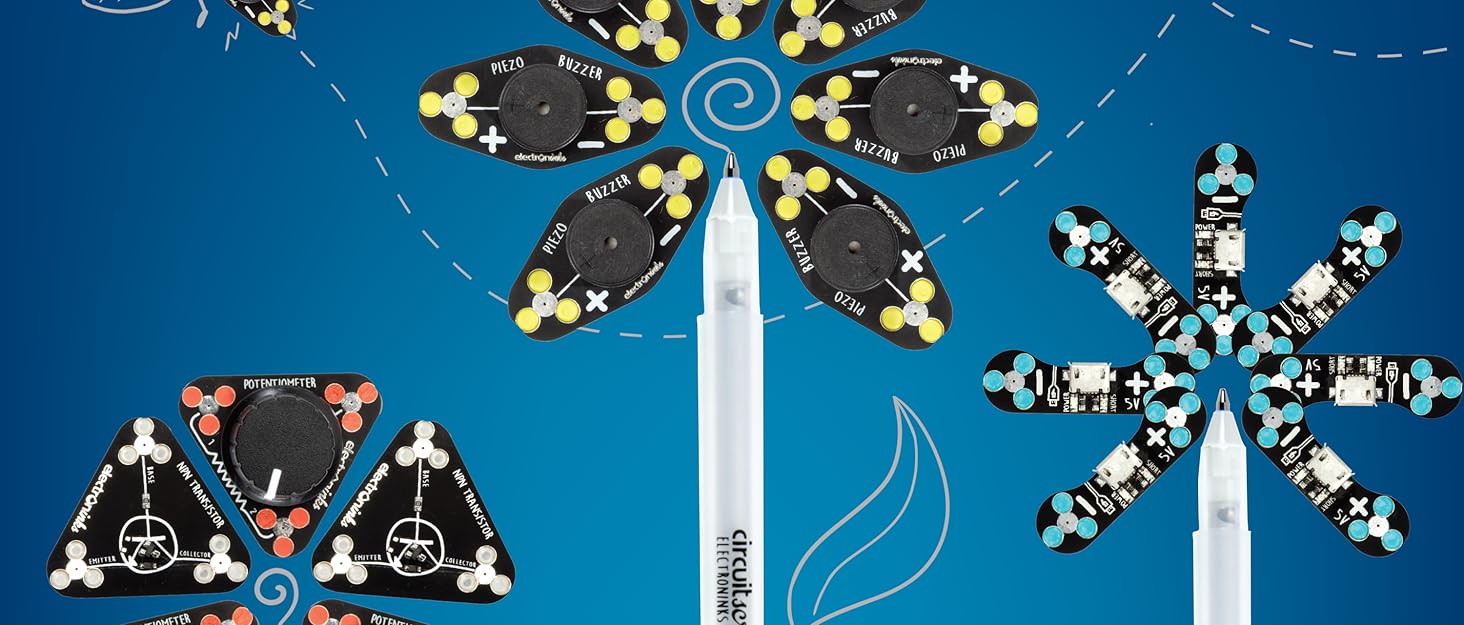
Introduction: Redefining the Boundaries of Creativity and Science
The traditional barriers between art and engineering, between creative expression and scientific experimentation, are being dissolved by a revolutionary tool. In a world where STEM education is paramount, finding methods that are not only educational but genuinely captivating for young minds is a constant pursuit. The challenge lies in moving beyond abstract theories and pre-packaged experiments to foster true innovation and hands-on understanding. Emerging as a beacon in this field is a product that transforms the simple, universal act of drawing into a powerful lesson in electronics. This is not merely a science kit; it is a fundamental shift in approach, putting the power of circuit design directly into the user’s hand. By replacing wires and complex soldering with a fluid, conductive line drawn on a piece of paper, it unlocks a world where any sketch can become a functional, electronic creation, making the principles of electricity tangible, accessible, and limited only by one’s imagination.
The Vision Behind the Ink: A Mission to Democratize STEM
The creation of this conductive ink pen is rooted in a powerful educational philosophy. It was born not in a massive corporate lab, but from the minds of Ph.D. graduates and engineers who saw a gap between complex theory and engaging practice. Their mission was clear: to make STEM education accessible, engaging, and hands-on for learners of all ages. They asked a simple yet profound question: “What if building a circuit was as easy as drawing a line?” The answer materialized as a rollerball pen filled with non-toxic, highly conductive silver ink. This innovation, passionately supported by a community of over 12,000 Kickstarter backers, effectively demystifies electronics. It empowers children and adults alike to see themselves not just as consumers of technology, but as creators and inventors, fostering critical thinking and problem-solving skills through direct, uncomplicated interaction with the fundamentals of electrical engineering.
Unboxing Potential: Component Quality and First Impressions
The product’s presentation is straightforward yet promising. The package contains two sleek, well-constructed rollerball pens, each housing a reservoir of the special silver ink. The pens are designed for comfort and control, resembling a high-quality standard pen, which immediately makes the technology feel familiar and easy to use. The knowledge that these two pens hold the potential to create kilometers of circuitry is a powerful testament to the concentrated innovation within. There is an immediate sense of quality and purpose; these are not disposable tools but reliable instruments for exploration and creation.
The Core Technology: How the Conductive Ink Pen Works
The magic of the system lies in its elegantly simple yet scientifically advanced core: the conductive ink itself.
The Science of Silver Ink
Inside the pen is a non-toxic, water-based ink saturated with microscopic particles of pure silver. Silver is one of the most conductive metals known, and the formulation is precisely engineered to ensure these particles are suspended in a solution that flows smoothly from a rollerball tip. When the ink is deposited onto paper, the water carrier evaporates rapidly, leaving behind a solid, contiguous trail of silver particles. This created pathway allows electrons to flow freely, acting exactly like a wire drawn onto the page. The resistance is remarkably low, measured at 2-10 ohms per centimeter of writing, which is sufficient to power LEDs, spin small motors, and activate buzzers in typical educational circuit projects.
The User Experience: Drawing Circuits
Using the pen is as intuitive as writing a note. There is no special technique required beyond ensuring a solid, continuous line is drawn between connection points. The ink dries quickly, often in a matter of seconds, allowing for almost immediate testing of the circuit. This instant feedback is crucial for the learning process, enabling users to quickly identify and correct breaks in their drawn “wires” and understand the fundamental principle that a circuit must be a complete, unbroken loop to function.
Practical Application: Bringing Paper Circuits to Life
The true value of the pen is realized when it is integrated with other electronic components to create functioning projects.
The Basic Workflow
A typical project begins with a sheet of paper. Users draw their circuit design, connecting positive and negative terminals from a battery holder to components like LEDs, switches, and sensors. Magnetic modules, often included in Circuit Scribe kits, can be placed directly over the drawn lines to make a secure connection without clips or soldering. Once the battery is connected, the drawn lines complete the circuit, and the LED lights up or the motor begins to spin. This moment of success—seeing a hand-drawn design come to life with light and motion—is a profoundly empowering experience.
A Multitude of Projects
The applications are vast, ranging from simple beginner circuits to complex creations. Users can start with a basic light-up greeting card and progress to drawing a working paper-based dimmer switch, a burglar alarm with a magnetic sensor, or even interconnected circuit sculptures. The pen encourages an iterative design process; if a circuit doesn’t work, the problem is visually apparent, and the solution is as simple as drawing a new line. This trial-and-error approach is the essence of engineering and is beautifully facilitated by the medium.
Versatility and Advanced Uses
While designed for educational kits, the pen’s utility extends far beyond the classroom or living room floor.
Beyond Paper
The pen will write on any surface a standard rollerball pen can, opening up a world of possibilities for hobbyists and professionals. It can be used for quick circuit board repairs, creating custom connections on control panels, mending ribbon cables, or even incorporating circuitry into mixed-media art projects. This versatility makes it a valuable tool in a maker’s arsenal, useful for prototyping and fixing electronics in a pinch.
Replacement and Longevity
As a 2-pack, this product is ideal for households, classrooms, or makerspaces. It serves as a perfect refill for existing Circuit Scribe kits once the original pen runs out, ensuring that the learning and creating never have to stop. With each pen capable of drawing between 60 and 200 meters of conductive line, the potential for countless projects is immense.
The Educational and Cognitive Benefits
This tool is a powerful catalyst for developmental growth, seamlessly blending fun with foundational learning.
-
Demystifying Technology: It breaks down the “black box” of electronics, allowing learners to see and understand the pathways that power their world.
-
Enhancing Spatial Reasoning and Planning: Designing a functional circuit requires forethought and an understanding of how components will interact in two-dimensional space.
-
Fostering Creativity and Innovation: The platform encourages artistic expression merged with technical skill, proving that science and art are not mutually exclusive but are powerful partners.
-
Developing Problem-Solving Skills: The immediate visual feedback when a circuit fails encourages critical thinking and systematic troubleshooting, which are essential skills in all scientific and engineering disciplines.
Ideal Use Cases and Environments
The Circuit Scribe pen is uniquely suited for a variety of settings due to its accessibility and clean, engaging nature.
-
The Home: It provides a perfect activity for curious children, offering a screen-free, hands-on alternative that is both entertaining and educational. It is an exceptional gift for children aged 8 and up who show an interest in how things work.
-
The Classroom: Teachers can use it to illustrate abstract concepts like current flow, resistance, and circuit logic in a tangible, memorable way. It supports collaborative learning and can be adapted for a wide range of grade levels and curricula.
-
The Makerspace: For hobbyists and tinkerers, it is an invaluable prototyping tool and a means to add interactive electronic elements to art and craft projects.
Conclusion: A Pen That Draws the Future
The Circuit Scribe Conductive Ink Pen is far more than a novelty item. It is a thoughtfully engineered, highly effective educational tool that represents a paradigm shift in how we approach electronics and STEM education. By transforming a simple pen into a conduit for innovation, it lowers the barrier to entry for aspiring engineers and artists of all ages. It successfully makes the complex simple, the abstract tangible, and the intimidating approachable. The joy of watching a hand-drawn line carry electricity to light an LED is a powerful and unforgettable experience that can ignite a lifelong passion for science and creation. In a world that runs on electronics, this pen does not just draw lines; it draws connections, it draws understanding, and most importantly, it draws the blueprint for the next generation of inventors.